The rapid development of modern technology in the construction industry is beginning to change the way general contractors plan and execute projects. One of the most important pillars of this revolution is the use of AI in the design process, but it also entails construction work automation and digital supervision more and more often. What does it mean in practical terms, and what real benefits does artificial intelligence bring to construction supervision?
How is AI changing the process of construction execution supervision?
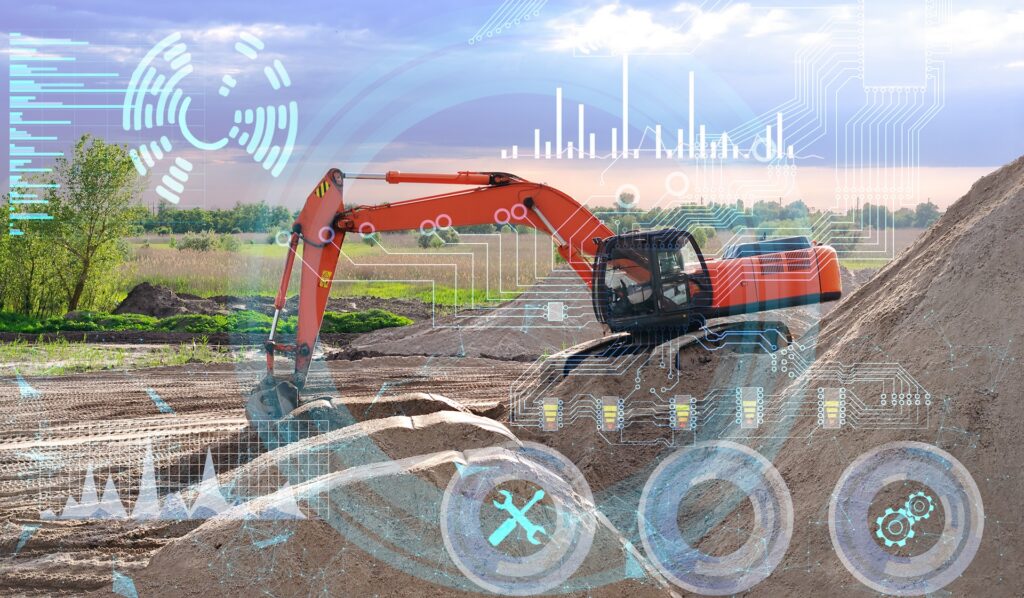
Traditional construction execution supervision today is based on regular visits by the engineering team, minutes, hundreds of emails and paper reports. Artificial intelligence, however, is beginning to change this process. Today, AI in construction supervision allows thousands of pieces of data from a construction site to be analysed on an ongoing basis, from photos and videos from drones to signals from IoT sensors and geolocation systems, giving a complete picture of what is happening on site. In practice, this means that the site manager can follow the progress of the work in real time without him or her having to be physically present on site at all times.
On large industrial construction sites, for example, integrated monitoring systems are increasingly common, with 360° cameras, drones and mobile sensors constantly recording workmanship status and progress. AI analyses this data in real time and creates reports accessible from the mobile app. Moreover, it is not just about monitoring progress. Modern systems also recognise some elements of health and safety risks, such as detecting whether employees are wearing hard hats, safety waistcoats and other personal protective equipment. This automation of site management is an excellent tool for those responsible for workplace safety: it helps to spot faults, which leads to accident reduction.
Digital tracking of construction materials and machinery is another interesting application of modern technology in the construction industry. In traditional supervision, it is often difficult to notice inefficiencies in their use, such as unnecessary equipment downtime. This is particularly important in situations where machines are rented, and each day of rental means an additional cost after all. Data analysis in investment supervision suggests how to optimise construction logistics by reducing the number of transport journeys or rescheduling material deliveries to avoid congestion on site.
Use of AI in the design and construction planning process
Intelligent systems for general contractors nowadays are a foundation that is difficult to dismiss for companies that offer customers more than just building services alone. Artificial intelligence supports designers and constructors in complex analyses that used to require weeks of work by entire teams of engineers. Of course, there is still a long way to go from the technical possibilities of AI to fully trusting it, but this is a direction in which structural design is bound to evolve.
What can artificial intelligence already do today? Modern software can automatically generate hundreds of design variants, analyse them for durability, cost and carbon footprint generation, and then identify the optimum solutions. This is a huge support not only for engineers, but also for investors who can make more informed decisions based on simulations of different scenarios.
Artificial intelligence also supports the optimisation of the work schedule. Example? AI can analyse contractor crew availability, weather conditions and possible delays in material deliveries to dynamically adjust the sequence of work. This makes cost and schedule prediction in construction much more reliable.
It is worth noting that a well-integrated design and planning process using AI translates directly into the digitisation of the execution process. Data from the design stage can be forwarded seamlessly into the implementation stage, reducing the risk of misunderstandings between the design and implementation teams, lowering the number of mistakes made.
Digitisation of the execution process – the role of artificial intelligence
Construction sites robotisation is becoming a reality, although it is a gradual process and still undergoing rapid development. More and more companies are choosing to digitise the completion supervision process by implementing automation and robotics solutions to help increase efficiency, reduce costs and mitigate skilled labour shortages. Drones and artificial intelligence in construction monitoring are no longer the sole solution.
What is the robotisation of construction about?
Introduction of masonry robots and 3D printers
The Hadrian X (developed by Australian company FBR) is a bricklaying robot that can lay up to 1,000 bricks per hour, far exceeding the capabilities of even the best construction teams.
Concrete 3D printers are increasingly in use in China and Dubai, as they can ‘print’ the walls of buildings and even entire houses in a few dozen hours.
Introduction of autonomous construction machinery
Giants such as Caterpillar and Komatsu are developing technologies for autonomous excavators, dozers and rollers that operate autonomously or with minimal operator control. Then, Boston Dynamics is testing humanoid robots that can move around a construction site and perform repetitive tasks, such as transporting materials.
Use of exoskeletons for employees
Although the full robotisation of construction is still a long way off, exoskeletons are increasingly being used to increase the strength and endurance of workers, reducing the risk of injury and trauma.
AI in the monitoring and supervision of project implementation
Artificial intelligence in the supervision of project delivery is now more than an electronic document flow. Thanks to AI and BIM (Building Information Modelling) tools, today, general contractors can dynamically update schedules, control budgets in real time and better manage the work of subcontractors if they use their services.
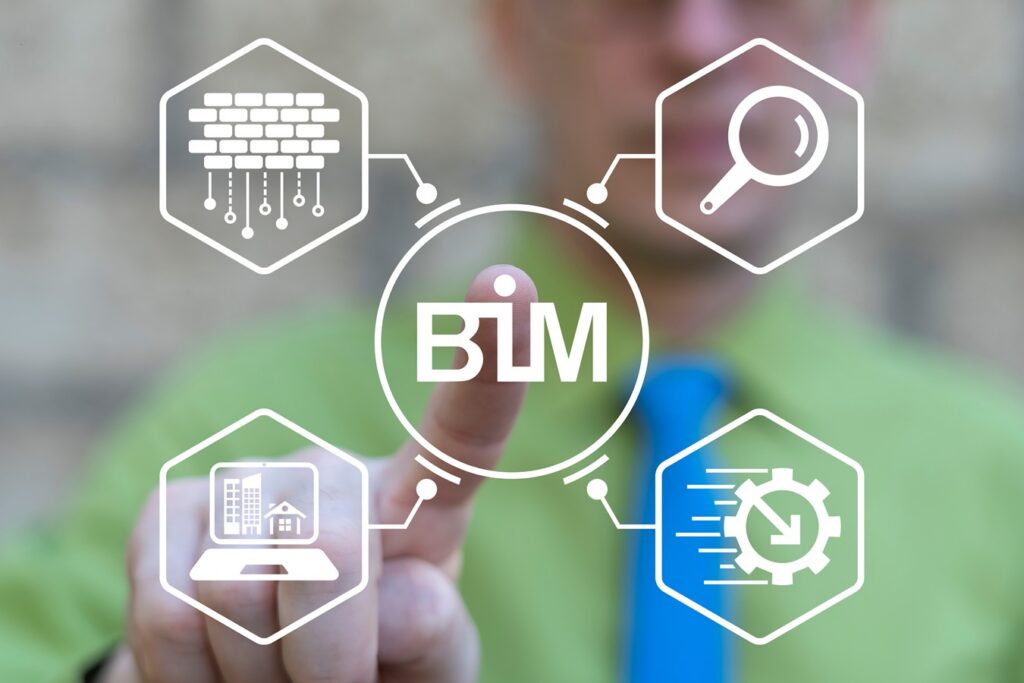
Example. Smart systems for general contractors on large construction sites include drones and advanced construction monitoring. The drones are used daily to fly over an area to create a 3D point cloud. AI analyses this data, comparing the actual state with the BIM model. Differing data are immediately brought to the attention of the project manager, who can react immediately, without delay, which with conventional supervision might only come to light at the inspection, or even acceptance stages.
Optimisation of costs and risks through digitisation of supervision
One of the most important challenges in the work of a general contractor is to maintain control over the budget and schedule of a project, particularly when considering unpredictable factors such as material delivery delays, necessary design changes or weather conditions. Artificial intelligence, combined with advanced data analytics, is today becoming a key tool to support cost optimisation and risk reduction in the execution supervision process.
Cost and schedule prediction in construction. AI makes it possible to predict budget overruns or schedule delays in advance by analysing data from previous implementations, construction schedules, weather data or crew performance. Machine learning algorithms learn from the vast amount of historical data and can identify patterns that lead to disruptions in investments.
One example is the Alice Technologies system, which, based on data from hundreds of projects already completed, can indicate which tasks are most at risk of delay. Moreover, it can propose alternative sequences of works to minimise the risk of time collisions or downtime.
Real-time detection of deviations. With real-time digital supervision, AI can compare site data (e.g. from 3D scans, drone imagery, reports from BIM systems) with design assumptions. This type of solution allows discrepancies between plan and the actual situation to be identified quickly, before they turn into costs or delays, as well as corrective actions to be put in place to minimise the length of delays.
Automatic detection of budgetary risks. Ai-enabled integrated digital platforms (such as Procore, Autodesk Construction Cloud or Dalux) are able to analyse changes in cost estimates and budgets and generate alerts when they detect abnormal patterns, such as a sudden increase in material orders or excessive resource consumption in an area. This gives project management time to react before cost overruns become irreversible.
However, it is worth noting that data analysis in project supervision not only helps to diagnose risks, but can also suggest how to counter them and generate recommendations.
The future of AI in construction supervision – what changes can we expect?
Technological changes in the construction industry are still at their initial stage, and general contractors are slowly getting used to the solutions available today. Implementing them will require a lot of work and project costs. Bricklaying robots, drones, cameras and advanced sensors on work clothes – all of these can be found on construction sites today. But there are even more opportunities on the horizon. Systems are already being developed that combine AI with AR (augmented reality) technologies. The site manager, looking through AR glasses, can see in real time which elements of the structure are ‘as designed’, and which need improvement. This is not science-fiction, but the real direction in which the digitisation of the execution supervision process is heading in the long term.
Despite the plethora of modern solutions supporting the digitisation of the execution process and the digitisation of the execution supervision process in the construction industry, it must be emphasised that artificial intelligence will not replace the engineer. However, it can free up his or her time from routine, repetitive tasks and allow him to focus on what matters most, that is, safety, quality and process optimisation. By implementing modern technologies in construction, we are taking a step towards more sustainable, predictable and cost-effective investments. And this is, after all, the goal that unites investors, general contractors and designers.