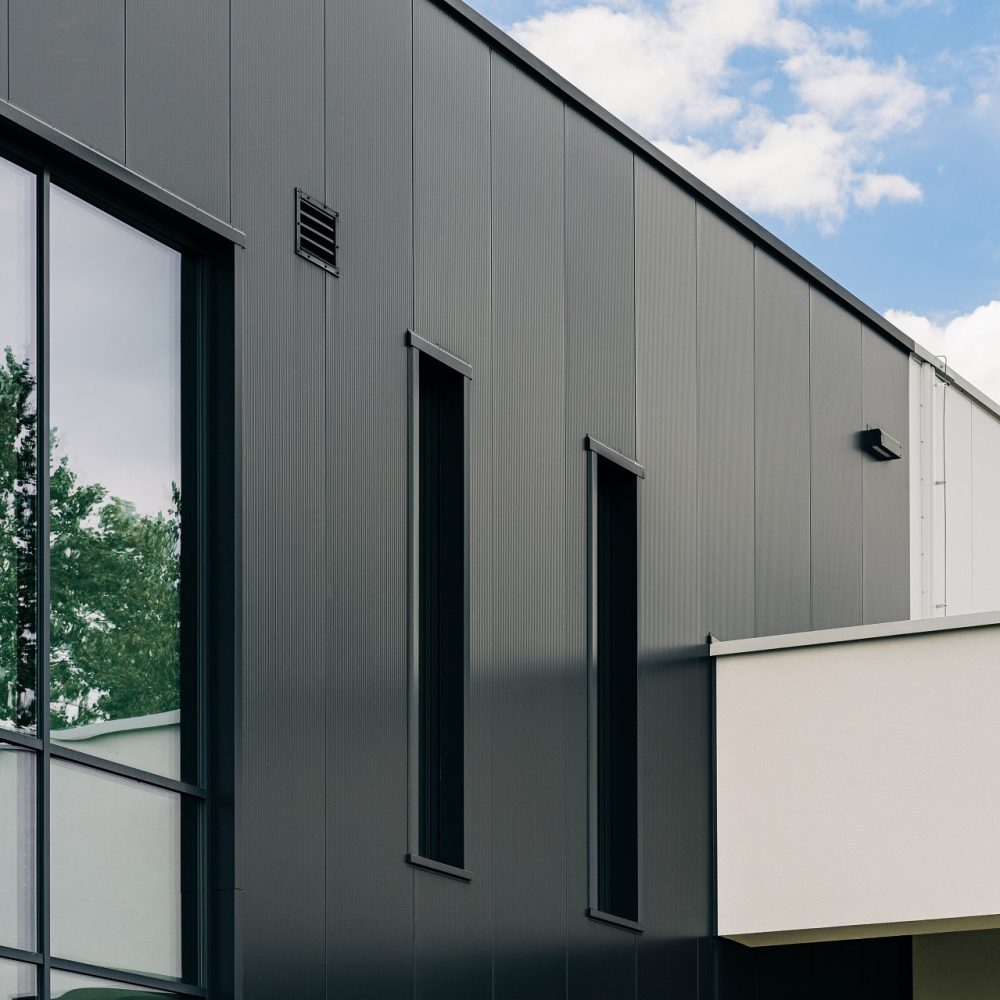

Commercial buildings combine their functional and commercial functions with aesthetics and the provision of appropriate comfort for users. In many cases, their appearance and their various amenities decide whether they will attract potential customers and leave a good impression, both of the building and the service provided. The above suggests that the design of a commercial building is a challenging task from the outset, combining engineering and technical thought with artistic vision and a proper sense of aesthetics. Commercial buildings are not only commercial pavilions, small service outlets or shopping malls, but also retail and service buildings that allow for the creation of a large commercial and service area for the customer as well as technical and service facilities depending on the scope, form and type of service provided.
Read the following sections of this article to learn what commercial buildings should be like, and what to focus on when designing a commercial building.
Retail and service buildings – how do they differ from other large-scale facilities?
As outlined in the introduction, retail and service buildings are designed with more than just the basic functional qualities in mind, as prescribed by the building’s purpose. At every step of the design of a commercial building, one should think about meeting the needs of a service recipient (the customer). It is important to identify the type and scope of the service provided: a car garage, for example, must be equipped with appropriate technical facilities, lifting equipment (car lifts), examination pits and servicing equipment and tools. Technical facilities alone are just the tip of the iceberg, because in addition to professional and expert service and the right equipment to handle the vehicle, the customer also expects a quick customer service, efficient service and the most comfortable wait for the vehicle collection after the service has been completed.
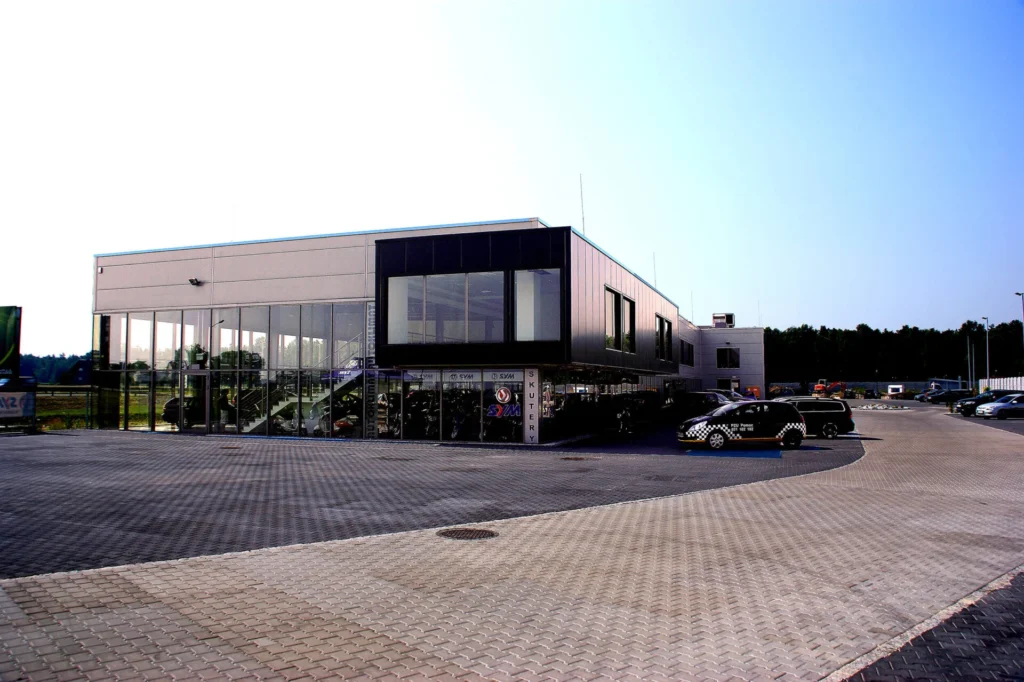
Commercial buildings and retail and service buildings are often associated with a brand whose logo functions as a hallmark. As such, in many cases commercial buildings not only bear service provider banner adverts, but often the entire building exterior wall finish and façades are designed so a brand could be recognised. Building a façade to follow a specific colour scheme is common practice. The exterior walls of commercial buildings are characterised by enhanced aesthetics. Steel commercial buildings also allow structural systems to be shaped in a way that is pleasing to the eye and sometimes almost artistic. Free shaping of structural elements in the form of layers, multi build-up columns are among the many measures that will help to add to the building lightness, elegance or prestige and make a good impression on customers, thus raising the standard of the building itself, ultimately influencing the image and brand of the company.
Commercial building design – what to pay attention to?
A well-designed commercial building should be adapted to the scope and form of the service provided. Adequately equipped back rooms guarantee a proper level of service provided by qualified staff. Proper site development around the commercial facility is equally important. The layout of car parks and their appropriate size, the development of green areas (if any), proper lighting and signage of the different areas of the service facility are of equally great importance.
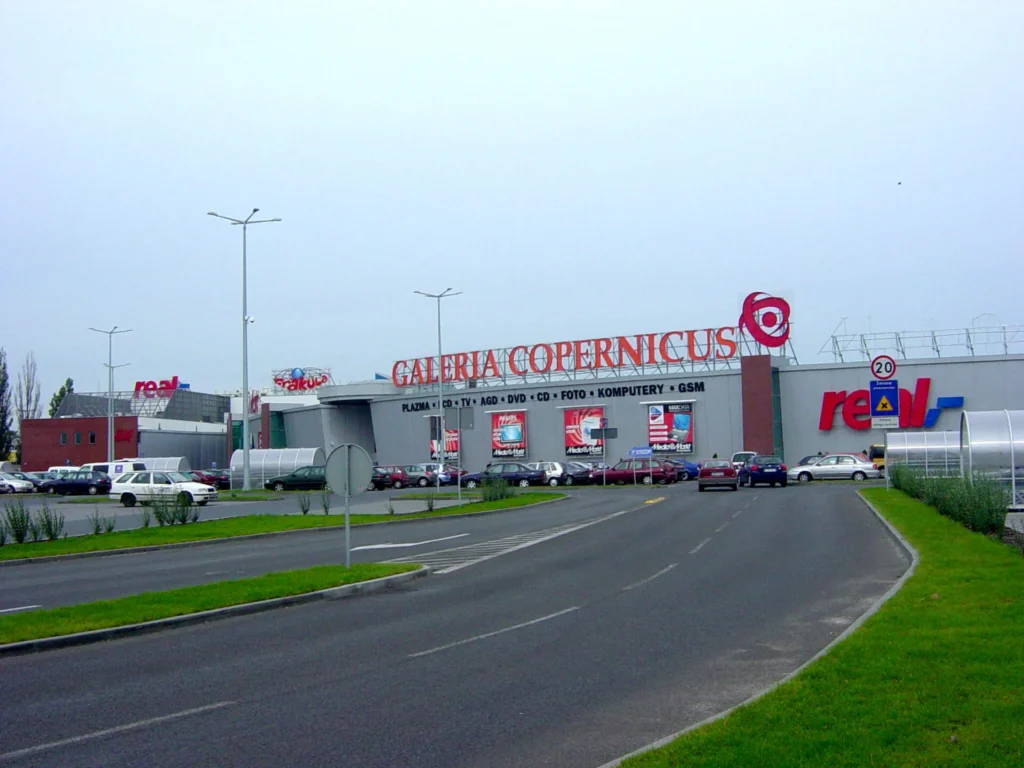
Farther, at the right distance, the space available to customers matters as well, as the comfort and good mood created by an aesthetically pleasing environment and appropriate amenities are on a par with the professionalism and quality of the service provided. It is fair to say that a commercial building is not only about an aesthetically pleasing façade and a graceful structure, but also about purposefully designed electrical installations, ventilation, air-conditioning and heating systems, etc. As already mentioned, customer comfort should at least match that of the employees, for whom the commercial building is a workplace. The right balance of natural and artificial light, the distribution of zoned and spot air conditioning, adequate air exchange and even building heating are extremely important conditions because they affect the overall comfort and well-being of those in the building. An efficient ventilation and heating and air-conditioning system is a priority in commercial and retail and service buildings. Arranging air-conditioning vents in such a way that they have a disruptive effect locally is unacceptable, because even distribution of fresh air and temperature balance throughout the building are among the many issues that require good planning and design. The provision of adequate lighting, including as much daylight as possible, access to social facilities and customer toilets, their proper maintenance and cleanliness are (almost) as important as the quality of the service provided. It should also be borne in mind that buildings of a commercial, retail and service profile often need appropriate product display, workstations and/or service desks created in harmony with the overall spatial order of the interior.
Retail and service building cladding, commercial building cladding – which solution to choose?
The type of cladding for retail and service or commercial buildings has to meet both the thermal insulation function and the above-mentioned corresponding high standards and aesthetic expectations.
Commercial building cladding can be installed in the form of sandwich panels of almost any colour. The use of muted colours in shades of grey and black lends elegance to the building – for a good example of such cladding go to our 20,000 m2 Jaworzno project at https://commercecon.pl/en/realizations/scc-jaworzno/.
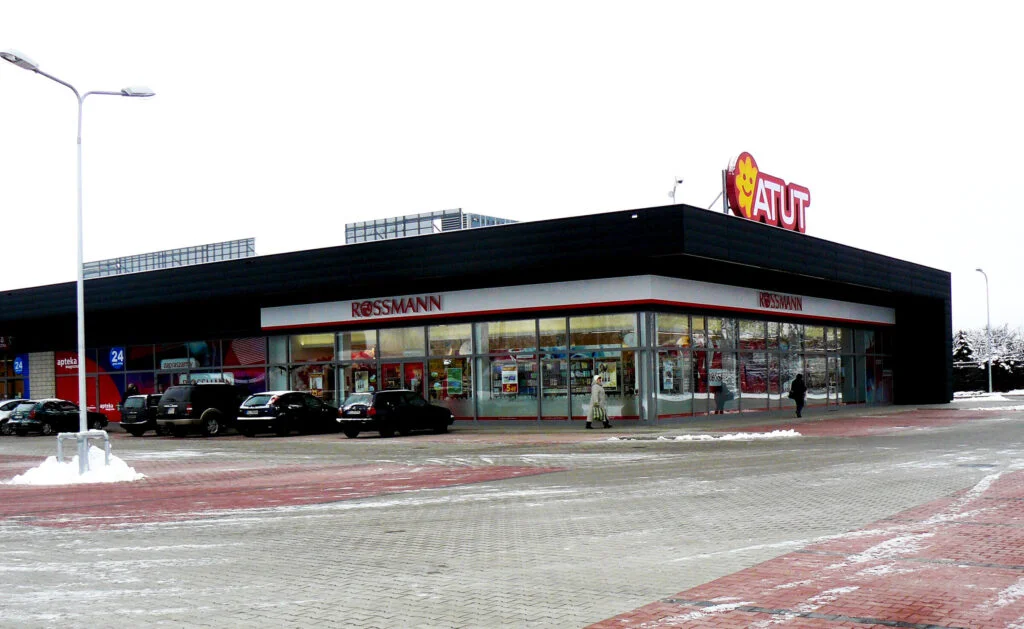
Commercial buildings with their cladding can be supplemented with aluminium shop front windows for displaying merchandise and allowing extra light into the commercial area at the same time. This is often the case in shopping malls and pavilions, one of which is our 3,600 m2 development in the city of Łódź at https://commercecon.pl/en/realizations/atut/.
Commercial building cladding can also take on flowing and curved shapes to visually contrast a heavy building form. One of the most interesting solutions in this segment is a building located in Nadarzyn near Warsaw, with a total area in excess of 40,000 m2, we completed using an unusual blue colour scheme combined with MAXIMUS II corrugated steel sheet cladding. We rounded the top of building’s edge over the main entrance and matched it with the building’s glazed entrance façade, as well as finished the longitudinal walls with curvilinear framing to give the building an unusual appearance. https://commercecon.pl/en/realizations/maximus-ii-shopping-centre/.
Commercial building design – what to start with?
To put it in a nutshell, the proper design of a commercial building is a multi-stage process. Identification of the functional and commercial features of the building, combined with appropriate building aesthetics, is the starting point for developing the concept in terms of the form, shape and colour of the building’s exterior and interior, as well as the appropriate division of its component parts into functional zones so that the overall impression is aesthetically pleasing, harmonious and well thought-out. The design of a commercial building should certainly be entrusted to an experienced General Contractor which draws upon its many years of experience to help in selecting the best and proven solutions and will appropriately interpret and give shape to the project owner’s vision of the building, which in many cases, as we have already mentioned, combines functional aspects with a representative role.