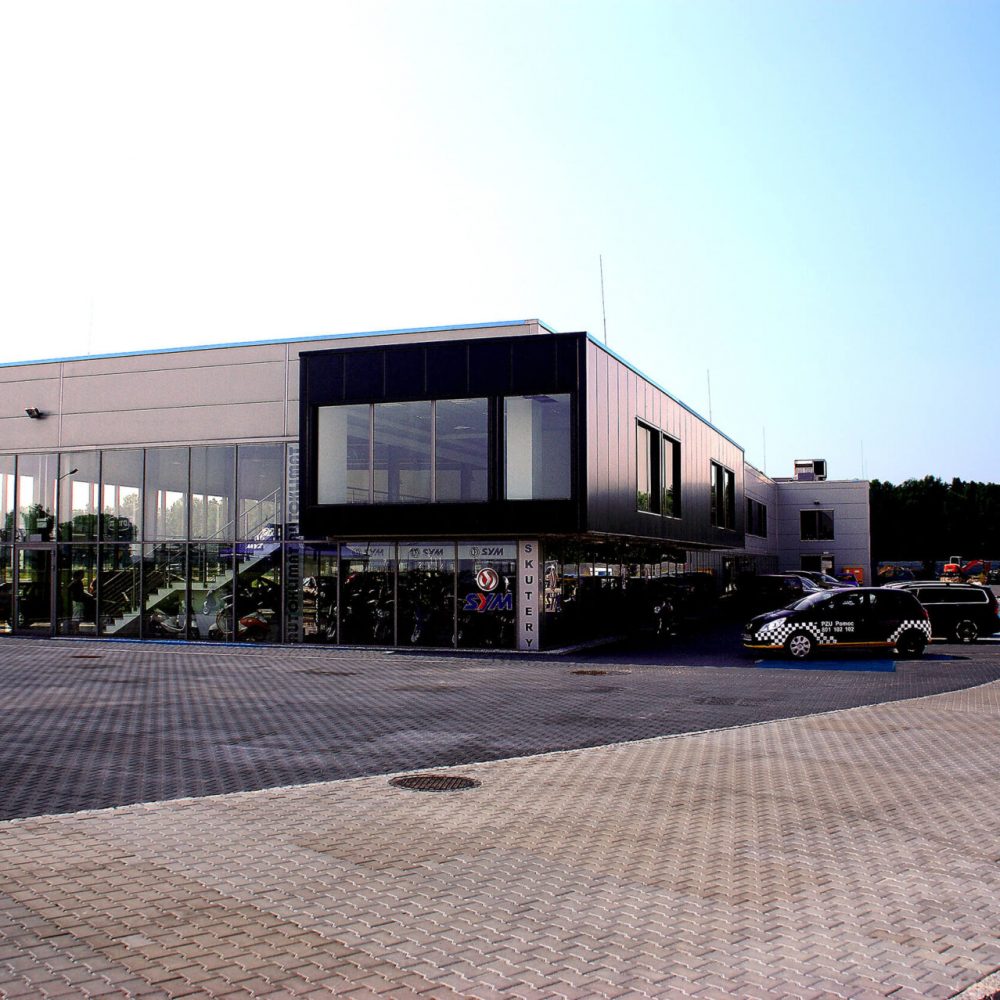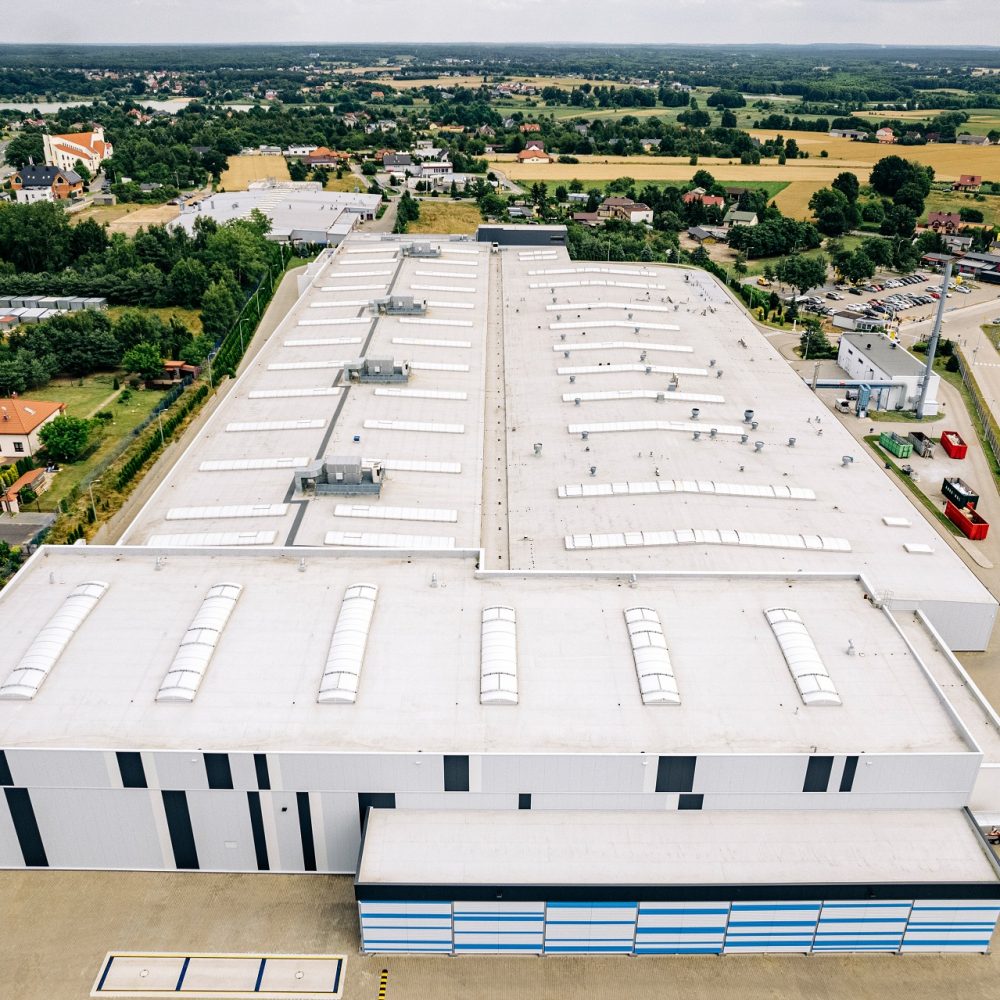

A large-area building project is a complex process, and construction is only one of the many stages. This is because before any actual work is started, an investor has to select and purchase a plot, have the design prepared and compile the necessary documentation. Only after all this has been accomplished – with the building permit in hand – can construction work get underway.
Construction stages for large-area buildings
The construction of large-area industrial buildings is divided into several stages. While the first few of them must be carried out in sequence, several activities during the final construction process can overlap or happen simultaneously. The process always starts with the site preparation, laying the foundations on the ground thus prepared, and then, the structural components are assembled and the building wall cladding is installed, including all fenestration elements. At this stage, further work can be carried out simultaneously, which involves laying the industrial floor, equipping the building with the necessary systems and developing the site around the facility, including the construction of access roads. What to look out for at each stage?
Earthworks – it is worth carrying out a thorough site analysis
All constructions of large-area buildings begin with detailed work planning and scheduling, with ground preparation always completed first. It is crucial to carry out an in-depth analysis of the geotechnical conditions so that there are no surprises in the subsequent stages, which can significantly prolong the site preparation process and increase its costs, and in extreme cases, even make further construction impossible. What surprises are possible?
Some obstacles can be visible to the naked eye – these include unfavourable terrain, such as a steep slope that will have to be levelled, or wooded areas on the plot. If this is the case, there must be a predevelopment plan and probably clearing of trees, which is usually on condition that the general contractor of large-area building obtains the relevant permit. However, obstacles can be invisible at first glance and concealed deeper, which is why it is a good idea to carry out a geotechnical study of the ground. And although this is additional cost for the owner, investing in an industrial building is well worth incurring it. Geological and hydrological investigations will help to assess whether there is, for example, low bearing capacity soil or wetlands that will jeopardise any plans of constructing a building.
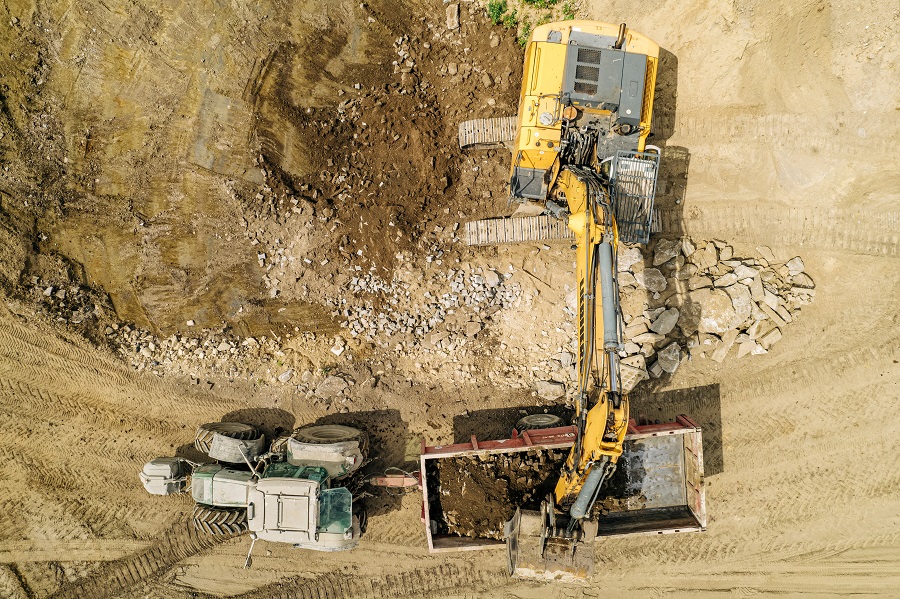
Following the analysis stage, the works themselves include: ground levelling, stabilisation of the native soil, construction of the controlled fill for the building platform, and preparation of the external services. In addition, the construction site facilities, including access roads for the construction period, material storage and areas for workers, are set up at this stage to ensure the smooth running of further work. This part is – compared to the subsequent stages – usually a long and strenuous part of the construction process.
Foundations for large industrial buildings – what do you need to know?
With the ground properly prepared, we can move on to the next stage, which is the construction of the foundations. This is a key component of industrial buildings which, being in direct contact with the ground, ensures the stability of the building, and therefore, the safety of its use. The function of the foundations is to transfer loads from the higher parts of the building to the ground. So, they must meet certain requirements to be considered safe. Their type and shape depend on several factors, including the aforementioned soil properties, but also on the type of structure. One criterion for the division of foundations is their shape: we distinguish between linear, surface and spot structures.
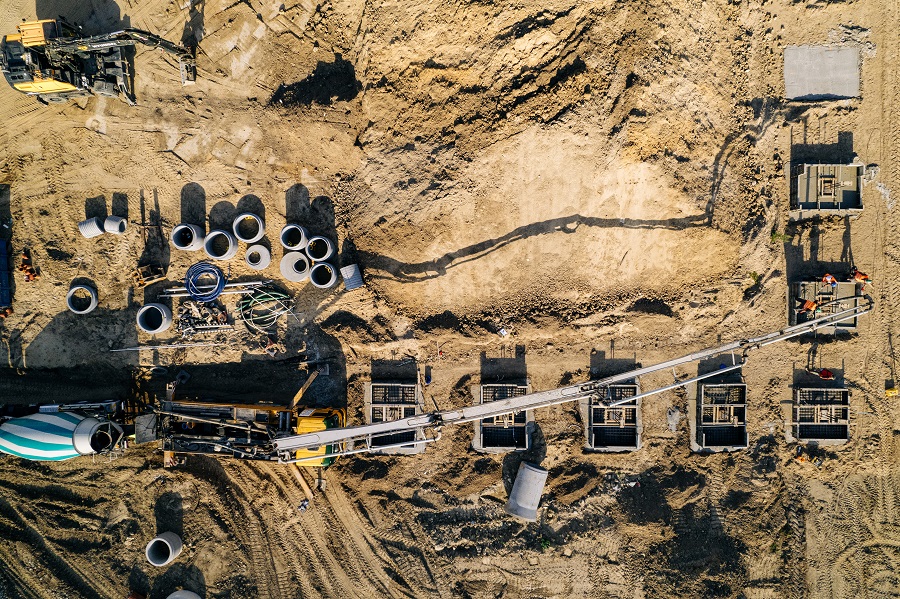
Contemporary industrial buildings are usually erected with a slender steel or reinforced concrete construction and their roof is mainly supported by fairly widely spaced piers. It will, therefore, be economically ideal to build the foundations under the steel or reinforced concrete buildings as spot elements under each pier individually. This type of foundation is also called a spot footing. The footing is a reinforced concrete element, that is, it consists of concrete reinforced with steel bars, submerged in the ground. It is therefore subject to the adverse effects of compounds in the soil as well as high levels of moisture, and sometimes also of advancing ground water, so it is required to have an adequate waterproofing rating. Once the footings are in place, it is possible to move on to the next stage of large-area building construction, which is the assembly of the structural elements.
Structural assembly is not what takes long to complete
The erection of the structural components, which are the piers and girders or trusses, is a very rewarding, although demanding, stage in the construction of large-area buildings. Rewarding, because the results of the work are visible in a short time, while demanding, because highly specialised equipment like cranes is necessary, plus, ultimately, assembly teams’ vast experience. And although, as an experienced general contractor we have already completed several hundred large-area buildings, there are still projects that continue to impress us.
One of the most recent of these has been the BOOSTER Zabrze project, an innovative logistics and service facility developed by LemonTree. To imagine the scale of this project, it is worth giving some figures. In Zabrze, we will install a total of 894 pre-engineered piers and 57 girders, which weigh 7,828 tonnes altogether! But the total weight is not the only parameter that can be impressive. One should also note the height of the piers, which – for the industrial buildings we tend to build – usually reaches several metres, but above all the span of the girders, the length of some of which exceeds 37 metres.
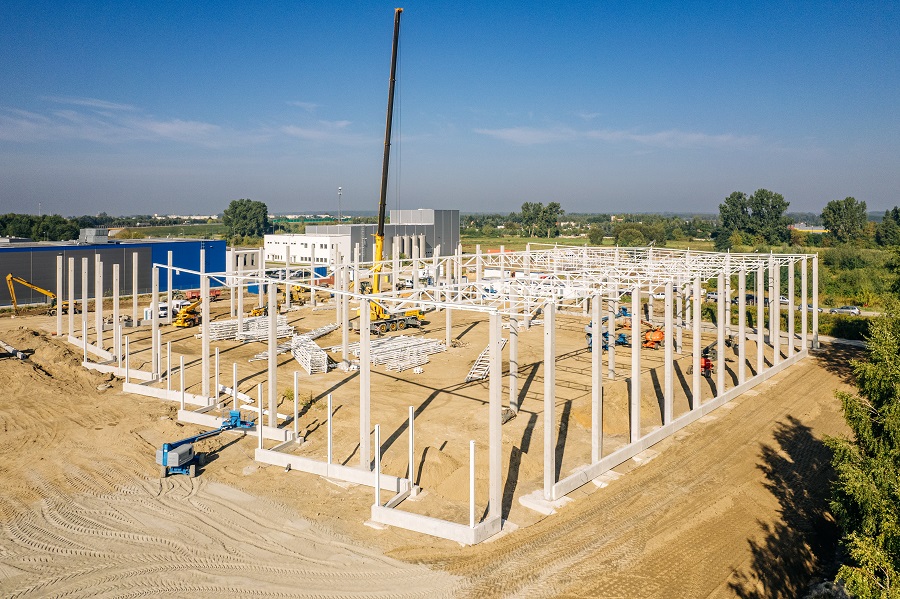
At this stage, it is worth mentioning that it is not only the assembly of such structures that is a challenge, but the handling itself, which requires appropriate preparation and planning.
And what does the process of erecting the building structure look like? This starts with the positioning and anchoring of the main piers, followed by the installation of the roof girders, which form the main load-bearing component of the roof. It is important to level and ensure the plumb of the aforementioned components, which will have an impact on the final aesthetics of the hall, but above all on its safe use. This is followed by the installation of secondary components such as roof purlins, wall and roof bracing, cladding transoms, door and eye supporting structures and other components provided for in the design of the large-area buildings.
Cladding of large-area industrial buildings
Once the frame of the steel or reinforced concrete building structure is in place, the assembly of the cladding can be started. In the case of large-scale industrial buildings, steel decking is most commonly used as the roofing material. If the building is to be insulated, then, sandwich panels are a good solution. The order of installation is important: the roofing is done first and then the wall cladding.
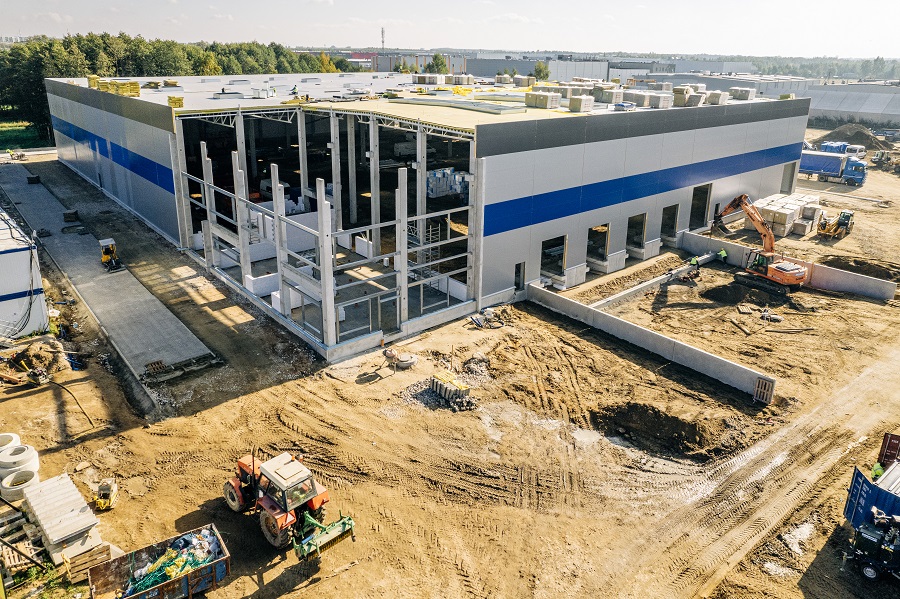
The next step is to add all the fenestration elements for the building using the finished products: windows, doors, gates, skylights, docks, the specification of which is defined in the project design, and then, to install out the necessary flashings.
The general contractor then moves on to fitting the necessary systems in the building, for example, heating and ventilation. Depending on the nature of the project, these may additionally include refrigeration and gas systems. The final stage in the construction of a large industrial building is the development of the surrounding area. Based on the owner’s guidelines, fences, car parks, roads, footpaths, as well as landscaping and greenery are constructed. The culmination of all stages is the submission of the building to the authorities for acceptance.